For years, we’ve been told that the Net Promoter Score (NPS) is the ultimate measure of customer health and loyalty. We’ve all chased high scores, celebrated our “promoters,” and built action plans to convert our “detractors.”
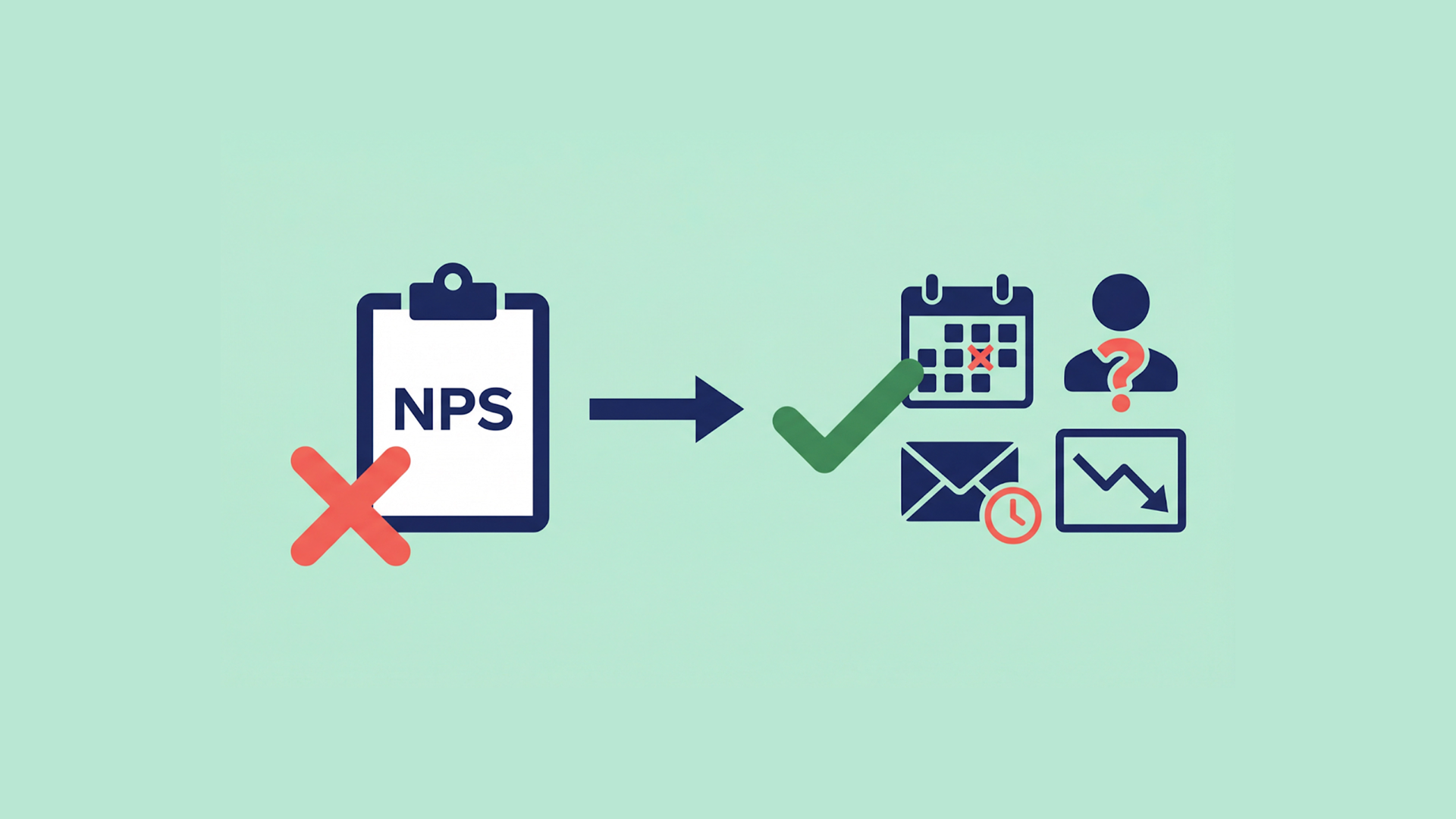
But I’m going to tell you something that our data has been screaming at us for a while now: NPS is a vanity metric when it comes to predicting churn.
It’s not that sentiment doesn’t matter. It’s that by the time a customer is willing to tell you they’re unhappy in a survey, they’ve already mentally checked out. The decision to leave was made weeks or even months ago. The survey is just the exit interview they don’t know they’re giving.
As one writer, Daniel Savov, put it, “Usage Drops Before Sentiment Does” [1]. That’s the key. The customers who are about to leave are already showing you through their actions—or rather, their inactions.
The Myth of the Happy, High-NPS Customer Who Churns
We’ve all seen it. A customer gives you a 9 or 10 on an NPS survey. Two weeks later, they churn. The team is shocked. “But they were happy! They were a promoter!”
Were they, though? Or were they just politely telling you what they thought you wanted to hear while quietly dismantling their reliance on your product? Research has consistently shown that there is no strong statistical evidence that a poor NPS score directly correlates with a higher churn rate [2, 3]. It’s a lagging indicator, capturing a feeling in a single moment in time, not the slow drift of disengagement.
The Real Churn Signals Are Silent
The most predictive churn signals aren’t found in survey responses. They’re found in the empty spaces. They are the “non-events” that we so often overlook. These are the signals that tell you a customer is quietly pulling away.
Here’s what you should be tracking instead:
-
The Rhythm of Conversation: Is the time it takes for your champion to reply to your emails getting longer? Are your messages being left on “read”? A change in communication cadence is often the first sign that priorities have shifted. When you’re no longer important, they stop making time for you.
-
The Shrinking Meeting: That weekly check-in that used to have five attendees now only has two. The key decision-maker suddenly has a “conflict” every week. When the meeting room starts to feel empty, it’s because your product is no longer a priority for the people who matter.
-
The Disappearing Champion: Your biggest internal advocate—the person who fought for your budget and sang your praises—suddenly leaves the company or moves to a new role. This is a five-alarm fire. Without a champion to fight for you, your renewal is in serious jeopardy.
-
The Ghost in the Machine: This is the most powerful signal of all: a drop in product usage. The user who used to log in daily now shows up once a week. The team that lived in your key feature hasn’t touched it in a month. This is the digital equivalent of a customer packing their bags. They are quietly finding alternatives and reducing their dependence on you.
From Sentiment to Systems: The New Way to Fight Churn
Tracking these “absence” signals is about moving from relying on what customers say to observing what they do. It’s about instrumenting the natural rhythm of the relationship you already have.
NPS is easy, which is why so many teams rely on it. Tracking behavioral signals is harder. It requires you to connect data from different systems—your email, your calendar, your product analytics, your CRM. But it’s the only way to get a real, forward-looking view of customer health.
So, before you send out another survey asking your customers if they would recommend you, take a look at your data. Who has gone quiet? Who has stopped showing up? The answers are right there. You just have to be willing to listen to the silence.
References
-
Savov, D. (2025, November 18). NPS Won’t Tell You Who’s About to Churn - Here is What Will. Navigating Product Growth. Retrieved from https://www.danielsavov.com/p/nps-churn
-
Gainsight. (2018, November 8). Does NPS Correlate to Churn? Retrieved from https://www.gainsight.com/blog/does-nps-correlate-to-churn/
-
Skalin. (2024, May 28). NPS is not a good indicator of customer loyalty, according to a new study. Retrieved from https://www.skalin.io/blog/en/nps-is-not-a-good-indicator-of-customer-loyalty