When I look back at how SaaS companies have tried to grow over the years, I see a few big shifts. It feels like we’ve gone through three distinct eras, each with its own playbook for growth.
First, there was the “Traditional” era (before 2016). This was the classic B2B model. Marketing generated demand, Sales closed deals, and Customer Success tried to deliver value. Everyone had their own lane. To make things run faster, we created siloed ops teams—Sales Ops, Marketing Ops, CS Ops. It made sense for accountability, but it was slow and clunky.
Then came the “Converged” era (from 2016 to 2022). High-growth SaaS companies started hitting a wall. The silos were breaking things. Data was a mess, and the blame game between teams was constant. As a result, smart operators started merging these functions into unified “Revenue Operations” (RevOps) teams. It was a huge step forward. By 2025, RevOps adoption had skyrocketed, with over 80% of enterprise companies and more than half of mid-market companies embracing the model [1]. The goal was to create a single source of truth and align the entire company around revenue.
Now, we’re in the “AI-Native” era (2023-today). When accessible AI tools exploded onto the scene, the game changed again. RevOps couldn’t keep up with the demand for automation and leverage. So, a new role emerged: the “GTM Engineer.” Coined by the team at Clay in 2023, this role is all about building systems for hyper-personalized outreach, orchestrating data flows, and basically putting the GTM engine on steroids [2]. It’s a role that’s growing fast, with hundreds of new job listings appearing every month.
And that brings us to today.
GTM Engineering is Mostly Acquisition Engineering
The “GTM” in GTM Engineering sounds like it covers the whole customer journey, right? From the first touchpoint to renewal and beyond.
But when you look closer, it’s almost entirely focused on acquisition.
Why? A few simple reasons:
- It’s where the quick wins are. Acquisition is full of repetitive tasks like prospecting and list building. Automating that stuff gives you the fastest return on your investment.
- It’s where the immediate pain is. The most pressing problem for most businesses is building a pipeline. So, that’s where the resources go.
- It’s where the tools are. The first wave of powerful AI and data tools was built to help you find, qualify, and engage new customers.
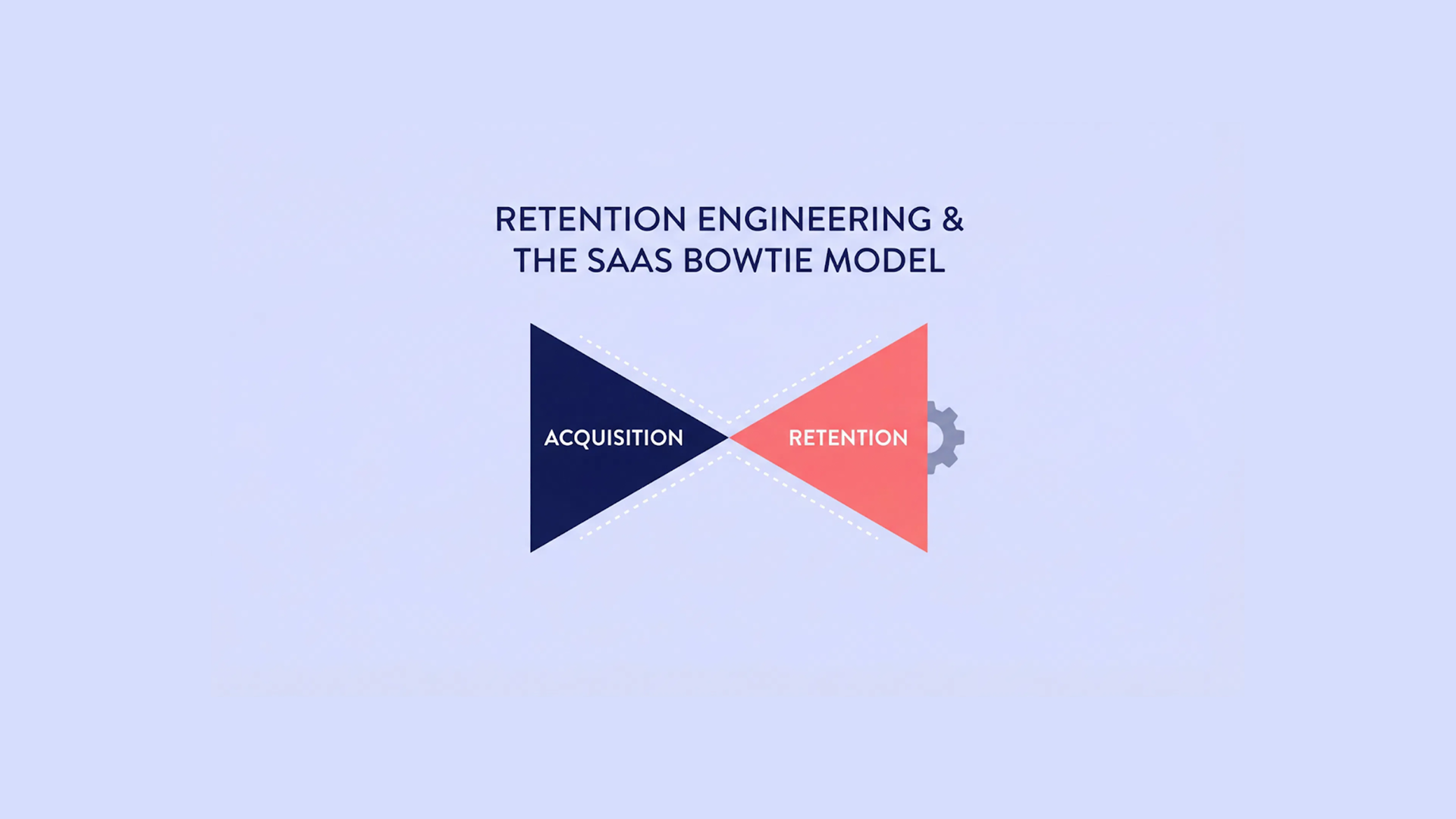
Meanwhile, the other side of the SaaS bowtie—retention—is still stuck in the past.
Retention Is Still Living in the “Traditional” Era
Think about it. How many companies still have a siloed CS Operations team, completely separate from the slick, unified GTM machine? The data is fragmented. The processes are a mess. And when a customer churns, the blame game starts all over again between CS, Sales, and Product. This isn’t just frustrating; it’s expensive. Research from Harvard Business Review has shown that companies can lose 20-30% of potential revenue due to these internal silos [3].
The tech stack for retention is often a patchwork of legacy systems that don’t talk to each other. It’s a nightmare for anyone trying to build modern, automated workflows.
And CS teams are feeling the squeeze. They’re being asked to drive revenue and be more efficient, but they’re working with one hand tied behind their back. With the median gross retention for SaaS companies hovering around 91%, every percentage point of churn matters [4].
It’s time to stop patching the old model. It’s time for CS to leapfrog directly into the AI-native era.
It’s Time for Retention Engineering
We need to give retention the same engineering mindset that we’ve given to acquisition. We need to build a new discipline: Retention Engineering.
Here’s what that looks like:
- Unified Processes: Get Sales, Marketing, CS, and Product in the same room to build retention processes with shared accountability. No more silos.
- Systematic Frameworks: Replace gut feelings and subjective judgments with clear, signal-based systems for managing the customer lifecycle. Know when to intervene and why.
- Seamless Data Flow: Connect your retention tools so product data can flow freely. Use it to trigger automations that free up your team for high-value, human interactions.
We’ve spent the last few years building an incredible engine for customer acquisition. Now it’s time to build the engine for customer retention.
References
-
Accenture. (2025, January 28). From chaos to cash: The Revenue Operations blueprint for success. Retrieved from https://www.accenture.com/us-en/insights/software-platforms/revenue-operations-new-business-imperative
-
Sharma, M., & Anand, V. (2025, June 18). The rise of the GTM engineer. Clay. Retrieved from https://www.clay.com/blog/gtm-engineering
-
Verde Group. (2025, April 19). How Siloed Operations Can Undermine Customer Experience. Retrieved from https://verdegroup.com/blog/how-siloed-operations-can-undermine-customer-experience/
-
ChurnZero. (2023, June 23). A look at customer retention benchmarks for SaaS in 2023. Retrieved from https://churnzero.com/blog/saas-customer-retention-benchmarks/